


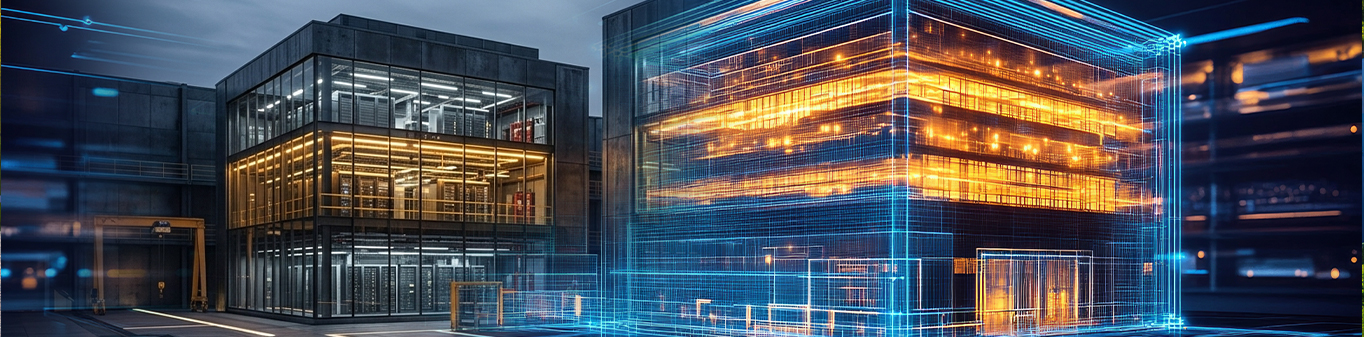

A digital twin is a structured, continuously updated digital model of a physical asset — a building, a plant, a production line, or a piece of equipment. It brings together the data produced across design, construction or manufacturing, and operation, and connects it to live data from sensors and control systems, so the model reflects how the asset is actually performing, not just how it was designed.
A twin is only as good as the data behind it. A model with missing classifications, inconsistent parameters, or incomplete asset information looks complete but answers few useful questions. Getting the data structure right — what the twin represents, how it is classified, and how it stays current — matters more than any single tool. This is where most digital twin efforts stall, and where engineering discipline counts.
There is no single platform that suits every asset or every organisation. The right foundation depends on the asset type, the data available, and the systems already in place. Neilsoft builds digital twins on established platforms — including Autodesk Tandem or Nemetschek dTwin for built assets — on IoT and visualisation platforms, and, where requirements go beyond what a product offers, from the ground up using databases, 3D and BIM data, and integration services.
Neilsoft's capabilities
Neilsoft works across the full digital twin lifecycle — from getting the source data right to connecting live systems and building the views an operations team needs — and chooses the platform to match the asset and the requirement.
Twin Strategy and Data Architecture
Defining what the twin should represent, the classification and parameter structure behind it, and how source data from design, construction or manufacturing, and operations maps into it.
Source Data Preparation and Enrichment
Cleaning and standardising models and engineering data — BIM and CAD models, equipment lists, asset registers — so assets, spaces, and systems carry the right information into the twin.
Platform-based Twins
Building twins on established platforms and configuring facilities, spaces, systems, and asset classifications.
Live Data and IoT Integration
Connecting sensors, BMS, SCADA, and other operational systems so the twin reflects real-time condition and performance.
Custom Twins and Applications
Where no product fits, building twins from the ground up — 3D and BIM viewers, time-series and asset databases, and web front ends — with APIs and audit designed in.
Analytics, Dashboards, and Integration
Turning twin data into the views, reports, and alerts operations teams need, and connecting the twin to EAM/CMMS, ERP, and BI systems.
Applications in engineering
Facilities and Asset Management
Locate equipment, access history and documentation from one model.
Operations and Maintenance
Move from reactive to condition-based maintenance using live data.
Energy and Performance Monitoring
Track consumption and performance against design intent.
Space and Utilisation Management
Understand how space or capacity is used and plan changes.
Process and Production Monitoring
Mirror plant or line behaviour for throughput and reliability.
Simulation and What-if analysis
Test changes against the model before acting on the asset.
Construction and Manufacturing Handover
Deliver a structured digital asset at project close instead of document dumps.
Portfolio and Fleet Operations
Manage multiple buildings, plants, or equipment on one data structure.


 Watch us on YouTube
 Join us on Linkedin